
Peter Crew – The Climbing Years
- Wednesday 27th August 2025
Following the passing of Pete Crew at the start of August 2025, Noel Dawson looks into the groundbreaking climbs of this legendary climber.
"I like leading. It means I can fall further." Pete Crew
Peter Crew found his great love for the hills and mountains when he was at grammar school. He joined many field trips to the Lake District and Wales organised by his geography teacher. Pete started to make regular visits to the mountains and soon developed an interest in climbing on rock.
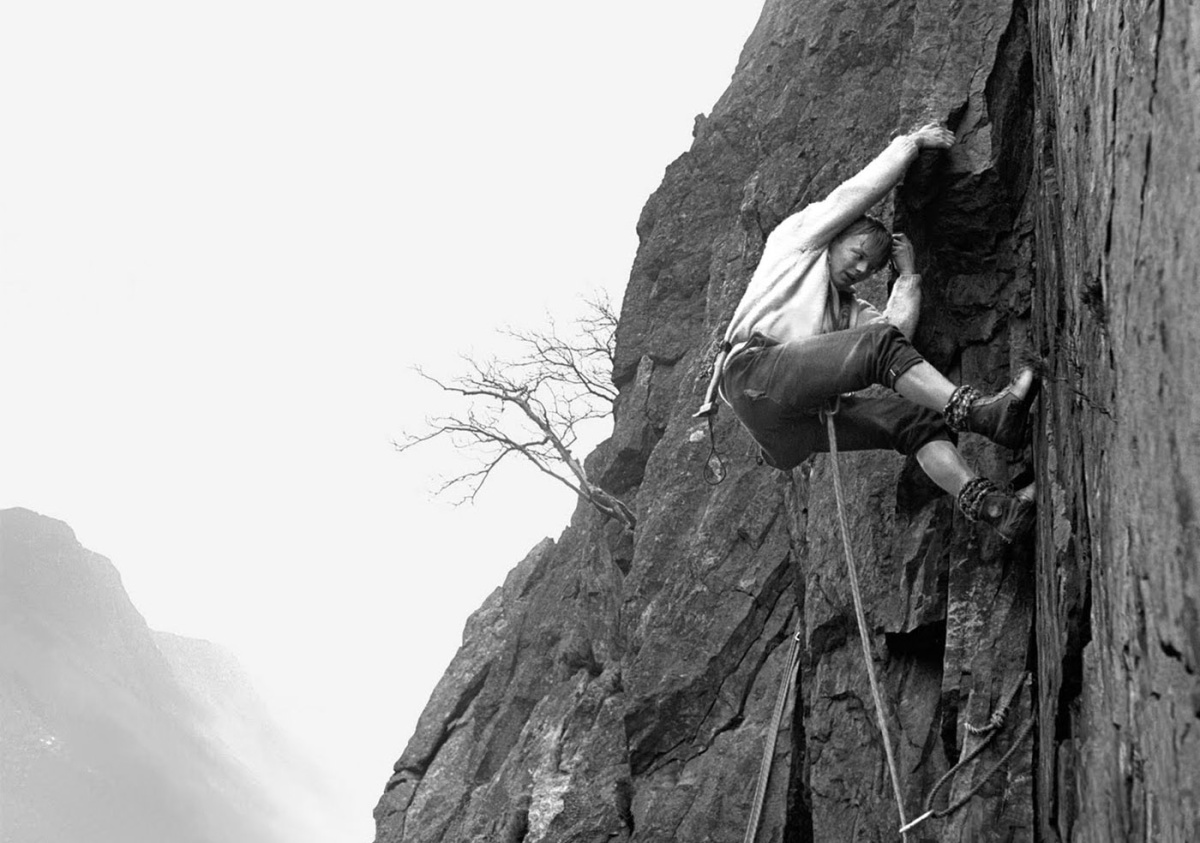 Pete climbed with Jack Soper at Clogwyn Du’r Arddu in Wales in 1961. Cloggy was the centre of climbing in Wales and many mountaineers were striving to claim their place in the development of climbing in the area. Pete and Jack made the first ascent of the Pinnacle Girdle on Cloggy during September, which is described in The Alpine Journal 1962 by John Neill and Trevor Jones as the ‘… most important new climb of 1961… a fine and very difficult route’.
Tony Moulam writes of the ascent in The Alpine Journal 1965: ‘A NEW era of Welsh climbing was ushered in on September 2nd, 1961, by the completion of the Pinnacle Girdle on Clogwyn Du’r Arddu. It had taken three days, was a ‘last great problem’ which had been attempted by several competent parties, and the conquerors were young and unknown’. Tony Moulam points out that, at the time, the amount of aid used on the route by Pete and Jack was questioned by some.
Pete also spent time with Barry (Baz) Ingle at Cloggy. They completed Serth on the East Buttress on 7th October. Tony Moulam describes the climb as ‘… an epic ascent by Crew and Ingle on a cold, wet day.” During the same year, Pete put up Slime Wall on Clogwyn y Grochan with Trevor Jones. John Neill and Trevor Jones write of the climbing in Wales at the time in The Alpine Journal 1962: “Yet another influx of fresh blood has appeared, in the form of the nucleus of young climbers doing the hardest climbs, among them B Ingle, P Crew, N J Soper, B Brewster and M Boysen’.
For a while Pete was a student at Oxford University but there were no real climbing areas near Oxford. Pete simply dropped out of his studies and he joined Pete Hutchinson and set up a climbing shop in Deansgate in Manchester. The pair went on to develop down equipment but struggled as Pete Crew was too often off climbing. Pete Crew moved to Wales, while Pete Hutchinson concentrated on the production of sleeping bags and duvet jackets, which became really popular. The business became Mountain Equipment.
In 1962, Pete climbed Orang-Outang at Stanage. He returned to Wales and Clogwyn Du’r Arddu, where he achieved numerous ascents with Baz. Pete made the third ascent of Slanting Slab on the West Buttress of Cloggy and ascended The Shadow on the East Buttress with Baz at the end of April. Early the following month, Pete climbed Haemaglobin with Baz on the West Buttress of Cloggy. At the same time Pete made the first ascent of Great Wall on the East Buttress. Baz was going to follow Pete but heavy rain meant an early end to the day of climbing. Great Wall had been unofficially known as Master’s Wall and had been attempted several times by Joe Brown.
Tony Smythe writes of the ascent in Rock Climbers in Action in Snowdonia: ‘The climb is just about the ultimate in difficulty and entails a 200-foot run-out using only three pitons for aid. A great controversy was waged over Pete Crew’s ascent. He abseiled down the wall, cleared out the crack and inserted all the necessary chockstones, thus preparing the route beforehand. But this technique is accepted and had been used before on the cliff’.
Climbing methods were continually evolving on Cloggy and elsewhere and Pete added his contribution to that evolution. Climbing strategies were changing and pushing forward what was possible on the crags but there were conversations and debates about these new ideas and their effects on the challenges that climbers wanted on rock. Great Wall surely established Pete as one of the most productive and successful climbers in Wales at the time.
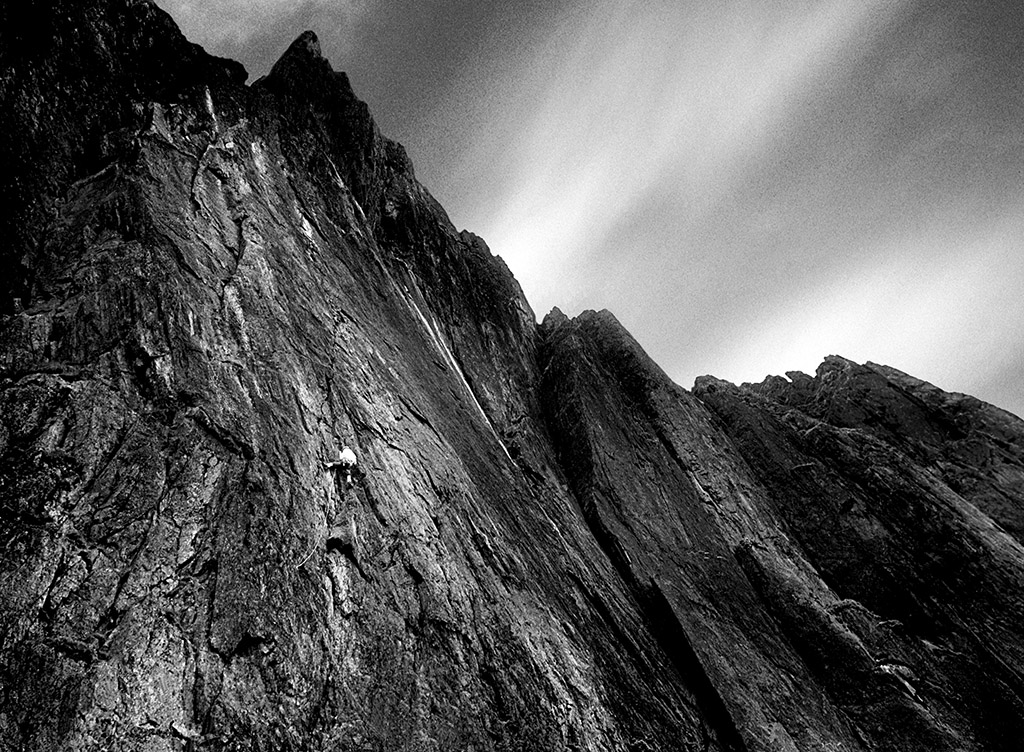 Pete and Baz journeyed to the Lake District later the same year. Pete made the first ascent of Central Pillar on Esk Buttress. He set off incredibly early, starting the ascent before a second party, including Allan Austin, reached the buttress. Pete and Baz made three climbs on Dove Crag by Ullswater. They repeated Dovedale Grooves, which had been first climbed in 1952, made the third ascent of Extol and completed the first ascent of Hiraeth. The pair also made the first ascent of Alexas on Buckstone How, Buttermere.
During August 1962, Pete climbed with Al Wright in the Dolomites and in Chamonix. They enjoyed remarkable success. Their climbs included an ascent of the Phillip Flamm Route on Monte Civetta, recorded in The Alpine Journal 1962 as only the third ascent of the route. The pair also completed the Solleder Route on Monte Civetta and the Cassin Route on Cima Ovest before journeying to Chamonix, where they climbed the famous Bonatti Pillar on the Petit Dru.
Pete made a solo ascent of The Brush Off at Rivelin Edge in South Yorkshire in 1963 and he ascended November on the East Buttress of Cloggy. Pete and Baz made the first ascents of the Great Buttress of Cyrn Las and Tremolite on Dinas Mot. Tony Moulam comments in The Alpine Journal 1965: ‘… and the varied weft of Tremolite wove its way up the unsatisfactory looking West Wing of Dinas Mot to provide a superb route for Crew and Ingle’.
Later the same year Pete and Baz made the first ascent of The Rosy Crucifixion and the pair ascended The Boldest, a direct line on The Boulder on the West Buttress of Cloggy. Pete used an expansion bolt for aid, not to the approval of all. Tony Smythe writes of Pete’s relationship with Cloggy during these years: ‘Pete is completely obsessed by Cloggy. In his capacity as co-author of the new guidebook, he has climbed practically all the seventy-four published routes, and must know as much about the cliff as anyone in Britain’.
In the Alps in 1963 ,Pete and Baz enjoyed a productive season. They completed ascents of the Brown-Whillans Route on the West Face of the Aiguille de Blaitiere, the Frendo Spur on the Aiguille du Midi, the North Ridge of the Aiguille du Peigne and the West Face of the Petites Jorasses.
On the 4th April 1964, Martin Boysen and Baz Ingle explored the Gogarth sea cliffs on the western tip of Anglesey. It was an unknown location for climbing and the Alpha Club climbers tried to keep it like that for a while. Martin and Baz ascended the first route on the cliffs, which they simply named Gogarth. Included in the earliest ascents at Gogarth was Ceilidh, put up by Pete and Richard McHardy. Pete and Baz put up many of the first routes on the cliff.
Joe Brown wrote of the discovery of Gogarth in his autobiography The Hard Years: ‘I had no idea where to find it, and the place I eventually found was the horribly loose and vertical cliffs around South Stack on Holyhead Island. The wall was certainly impressive, but also very off-putting. I thought, if this is where the young lads are climbing, then I really have been left behind this time’.
In 1965, Pete and Dave Alcock made a long-awaited second ascent of Woubits Left-hand at Cloggy, first climbed by Joe Brown and Martin Boysen. The following year Pete climbed with Dave Alcock at Gogarth. The pair put up Big Groove on the Main Cliff. Doug Scott remembers in his book Up and About – The Hard Road to Everest, climbing with Ray Gillies at the cliffs and viewing Pete and Dave ascending another route on the Main Cliff, which they called Jaborandi.
Doug writes of Pete using a large bunch of wires attached to a karabiner. He placed several before finding the one that best protected the route. It was the first time that Doug and Ray had seen such a number of wire chocks being used. Doug goes on to record that just a week later at Gogarth ‘… Pete and Joe Brown put up the very demanding and very loose overhanging Dinosaur with ten points of aid.’ Pete and Joe also put up the first ascent of Mousetrap on South Stack, Gogarth and several routes on Right-hand Red Wall and Yellow Walls. It seems that Joe was not left behind by the young lads.
During the same year Chris Bonington, Tom Patey and Rusty Baillie made the first ascent of The Old Man of Hoy. Chris and Tom returned the following year with Pete, Joe Brown, Ian McNaught Davis, Dougal Haston and an enormous BBC Outdoor Broadcast team. Chris and Tom repeated the original route, Joe and Ian put up a route on the South Face and Pete and Dougal ascended the overhanging South East Arête. John Cleare and Hamish MacInnes did much of the climbing filming. The television audience over several days was enormous.
Pete joined an expedition to Patagonia during the winter of 1967-68. The other team members were Martin Boysen, Dougal Haston, Mick Burke and Peter Gillman. The group attempted an ascent of Cerro Torre. They experienced poor weather for many weeks. A final attempt saw a return to the col and a search for their snow hole, which they were unable to find. Another howling gale came in. The expedition was over. In Pete’s report, he concluded that ‘Climbing certainly takes one to strange places ‒ but not Cerro Torre again, thank you!’ The small party had climbed in an impressive style. Many considered that they had shown a look forward to how climbing such mountains could be achieved.
In August 1968, Pete and Joe Brown put up a new route on the South Face of Monte Rouge de Peuterey. Returning to Gogarth in 1969 they completed two first ascents on Red Wall; Red Haze on the right-hand wall and The Girdle on the left-hand Red Wall. Around the same time, Pete’s Anglesey – Gogarth climbers’ guidebook was published. It described how, in just over five years, more than 130 routes had been put up in the area. Pete made a first ascent of the East Face of Aiguilles de Pra Sec with Leo Dickinson and Brian Molyneux in 1969. In Bregaglia, he ascended the North Faces of the right-hand and left-hand pillars of Pizzi del Ferro with John Cleare.
During 1970, Pete Crew stepped away from the sharp end of hard and competitive climbing, although he still wandered and enjoyed the crags and he still passed on his extensive knowledge to others. Pete ventured to pastures new; adventures in the world of archaeology, which he tackled in his own inimitable and enthusiastic style.
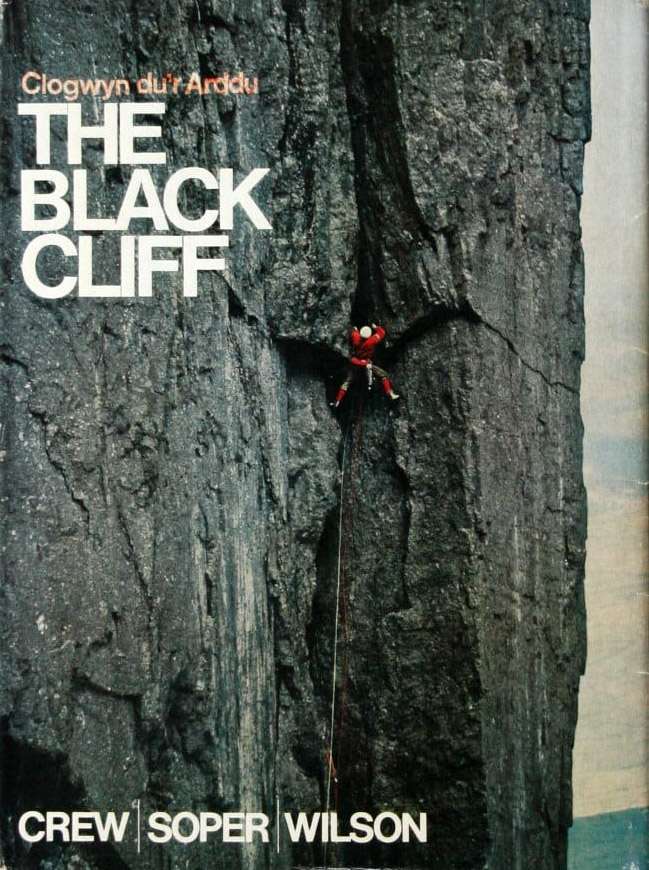 Just a year later, the enormously successful The Black Cliff by Pete, Jack Soper and Ken Wilson was published. It tells the magnificent history of Clogwyn Du’r Arddu and of the extraordinary mountaineers who have made Cloggy what it is today and, of course, Pete Crew was one of those climbers.
I have offered just a glimpse into the climbing years and climbing achievements of Pete Crew. Pete climbed at the highest level for a relatively short period of time but his very impressive list of ascents, particularly in Wales, fill many pages of fine mountaineering books and journals. His climbing partnership with Baz Ingle was truly remarkable, although, like partnerships in any walk of life, they had brief moments of disagreement and times when they felt they were not both heading in the same direction. I have read that they were different in some ways but that on rock their skills complemented each other and that they demanded the best of each other and as a result they were barely equalled in what they achieved.
Martin Boysen describes the climbing relationship between Pete and Baz in his book Hanging On: ‘Baz was one of the best climbers I ever met. He moved over rock with a neatness and lack of effort I envied. He was always cool and unruffled, quite unlike Pete who attacked the rock and often struggled mightily. Pete never looked calm. He was forceful and daring; his great strength lay in his utter determination. He overwhelmed a climb. Although Baz was technically far superior, it was Pete who drove the most effective climbing combination since Brown and Whillans’.
Researching Pete’s climbing years, I am left to consider that he flew at everything he did with great passion and remarkable enthusiasm. Pete’s contribution to the development of climbing at Clogwyn Du’r Arddu was certainly significant and his work detailing routes and recording the history of the area has been enjoyed by many. For Pete I think that climbing days were the best days and that he spent those days with some of the most talented British climbers of their generation. Pete was much admired by his peers and he quickly gained huge recognition for what he achieved. They were the greatest of times. Today, Pete is still remembered as a fine climber, a pioneer who set new standards for what was possible on rock and who showed a positive way forward for others to follow.
Bibliography:
Ascent by Chris Bonington
Hanging On by Martin Boysen
The Hard Years by Joe Brown
Rock Climbers in Action in Snowdonia by John Cleare and Tony Smythe
The British Cerro Torre Expedition 1967-68, Pete Crew, The Alpine Journal 1968
Alps by John Emery, The Alpine Journal 1962
North Wales 1961-64 by A J J Moulam, The Alpine Journal 1965
North Wales 1965 by A J J Moulam, The Alpine Journal 1966
Wales 1960-61 by J Neill and Trevor Jones, The Alpine Journal 1962
Alpha Males by Al Parker
Up And About – The Hard Road to Everest by Doug Scott
The Vector Generation by Mick Ward, UKC website
Many thanks to Martin Boysen and Steve Dean for their help with this article.