
Vanhee and Caldwell complete South African Route in a day - Expedition Report
- Thursday 26th February 2026
Belgian climber Siebe Vanhee and American climber Tommy Caldwell have successfully completed the 3rd free ascent of the South African Route on the East Face of the Central Tower of Paine, in Patagonia.
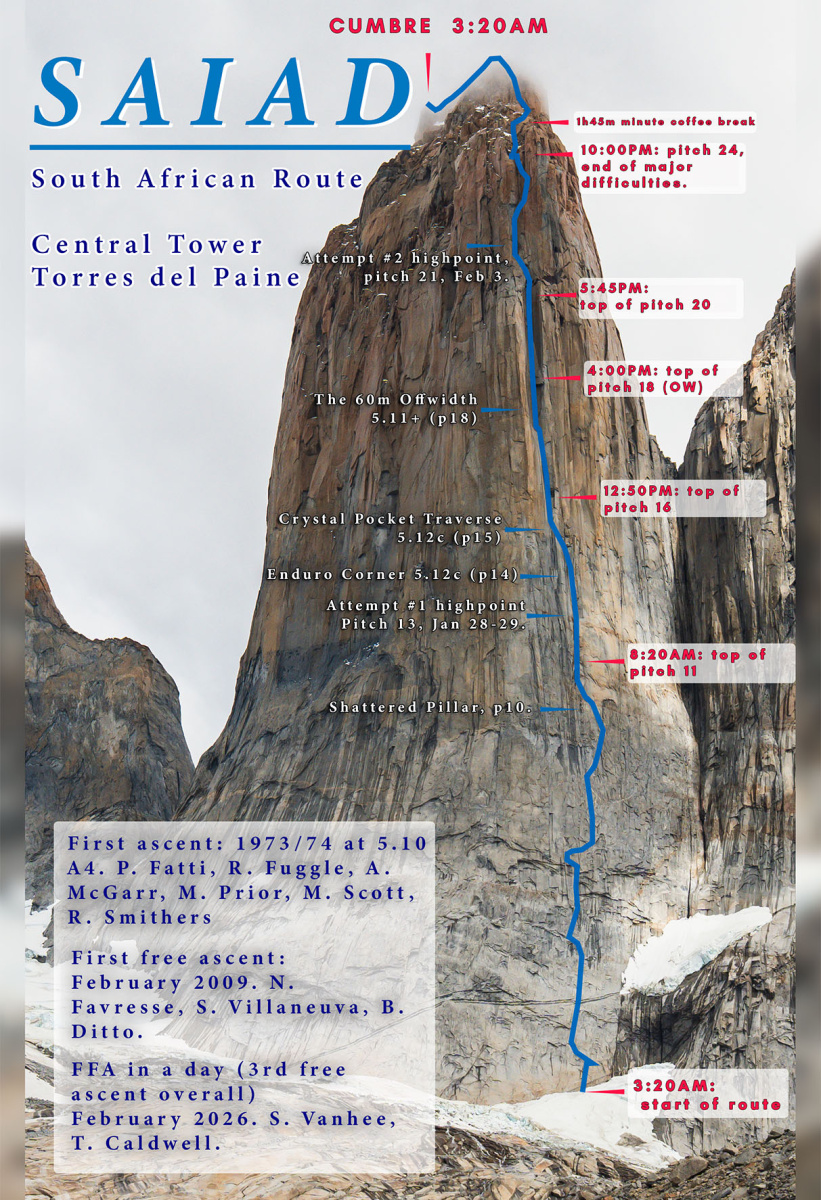
What’s remarkable is that they have done it in a single 24-hour push! SAIAD (South African In A Day) is a project that has been months in the making and took Siebe and Tommy three attempts before everything finally aligned on the 13-14th of February for them to make their successful attempt. It marks a landmark achievement in Patagonian Alpinism.
What follows is an Expedition Report sent to Climber from Siebe Vanhee.
SAIAD | Expedition Report – Siebe Vanhee
I don’t even know how to start describing this journey. Tommy and I sent our objective here in Patagonia — we free climbed the South African Route in a day! It took us three intense attempts over three weeks. On the 13th of February, we started at 3:20 a.m., and we topped out exactly 24 hours later, at 3:20 a.m. on the 14th of February. Afterwards, a big snowstorm caught us, and we rappelled for eight hours back to the base. This is by far one of my most epic experiences in the mountains, and I’m so proud to have shared this with Tommy, a truly strong and supportive climbing partner.
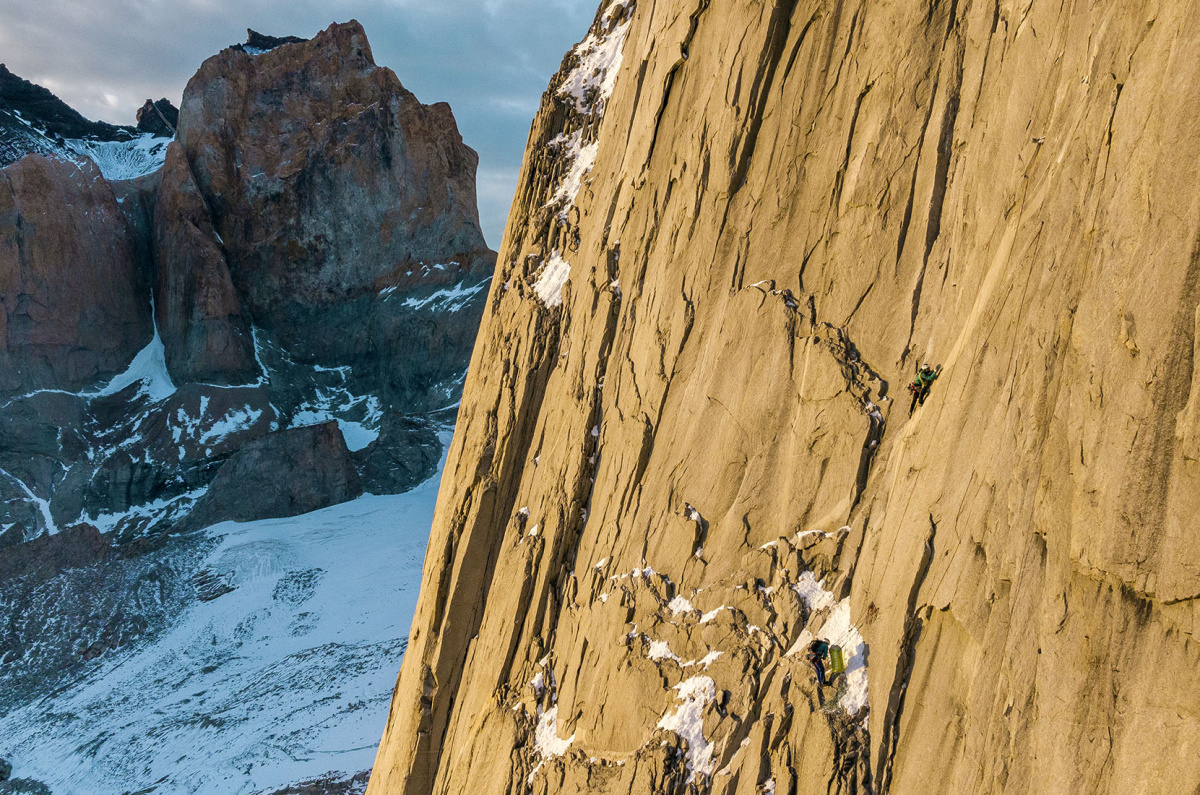
The South African Route (1200 m / 5.12c) is located on the East Face of the Central Tower (2450 m) of Torres del Paine. The route marks the first ascent of the East Face of the tower and was opened in an amazingly pure style, without any bolts, in 1973/1974 by a South African team (P. Fatti, R. Fuggle, A. McGarr, M. Prior, M. Scott, R. Smithers). In 2009, my fellow countrymen Sean Villanueva and Nico Favresse, together with U.S. climber Ben Ditto, made the first free ascent in capsule style in 13 days. Since then, only one other team free climbed the route in 2023. Our one-day ascent is only the third free ascent.
In 2018, Sean came up with the idea to try this project, but we got shut down by the weather and the complexity of the wall and conditions. The wall has long been known for its challenging rock climbing conditions — wetness, ice, and wind. Not only can the weather change very rapidly, but cracks are often full of snow and ice. Besides these challenges, going for a one-day push is a far more serious commitment because when a storm hits, you do not have the shelter of a portaledge or the comfort of fixed lines to descend as quickly as possible. All teams that have climbed this wall previously did it in at least one week, in big-wall style.
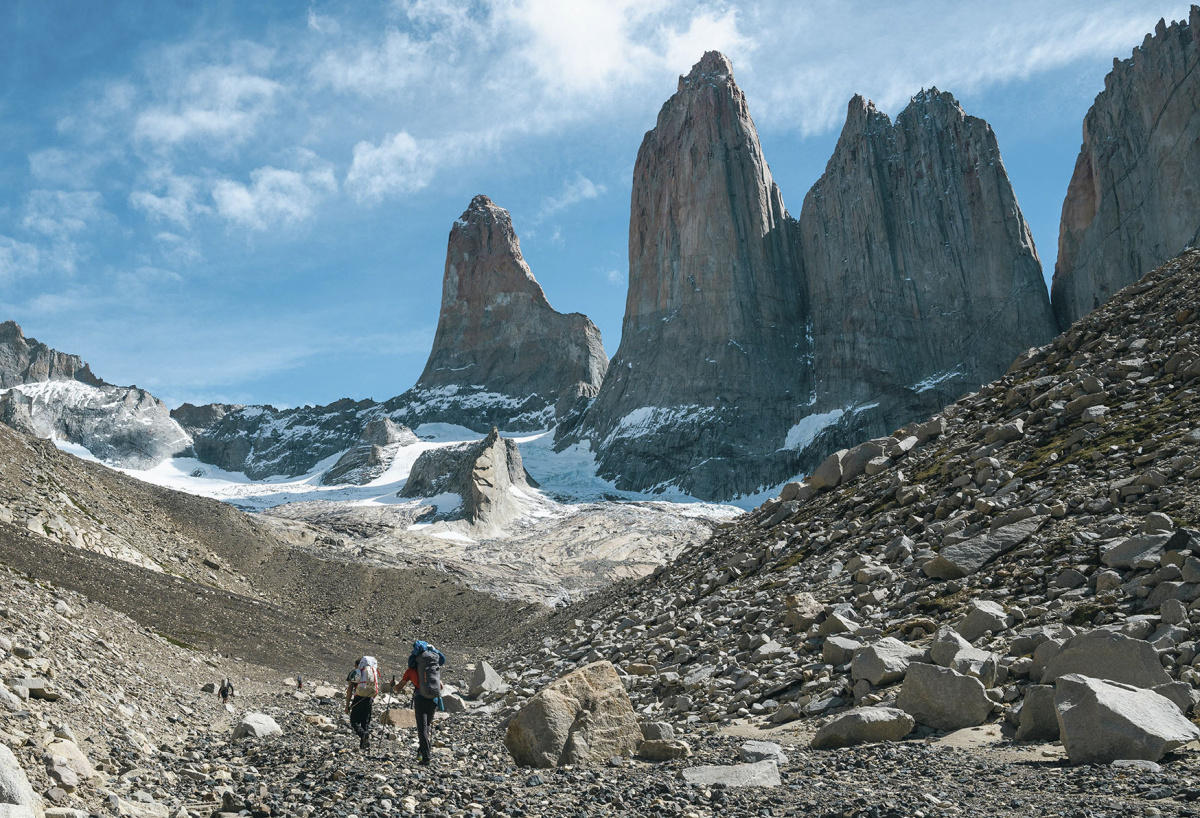 The chances of success on this project are incredibly slim. I didn’t think we would pull it off in the first season — so many factors had to align, and they never seemed to. But somehow, we did it. The weather window for the send wasn’t very promising. Several days of precipitation were followed by one dry but cloudy and very windy day on the 12th of February. The lower slabs dried about 75 percent, and the middle part seemed almost 100 percent dry, but we had no clue how the upper part of the wall would be. The 13th was a day with low winds, light cloud cover, and low temperatures.
We started off a little slower than on our second attempt, but quickly caught up by the time we got to the cruxes, pitches 14 and 15. Tommy took the lead on pitches 1 to 5, and we simul-climbed pitches 2 to 5. From there, I took the lead until the start of pitch 14, the enduro corner. Here Tommy took over. Despite having onsighted this pitch on our second attempt, Tommy took a slip halfway up the pitch. He checked the move, came down, and then sent the pitch. I followed and also sent — we were both a little nervous.
We knew we had both free climbed the whole route up to pitch 21 on our previous attempt. This time we had to do it again, ideally faster, and then continue with the remaining 300 metres of the tower. Free climbing these grades, in these conditions, over such a long effort would be challenging. We wouldn’t have much margin to fall on a pitch and try again, because our main objective was for both of us to free climb every pitch, on lead and as a follower. We wouldn’t have much time left if we made too many falls.
From pitch 15, I took the lead again. I wasn’t climbing as smoothly as on our second attempt, but I pulled it off and linked the pitch into pitch 16. One more pitch and we were at the base of the most intimidating and time-consuming pitch: the 60-metre offwidth. I was psyched that this one was for Tommy. He had done a great job leading this big pitch last time with only one number 6 cam, resulting in some gnarly runouts. When he was racking up, I told him how much I would love to lead it myself but was scared of blowing it and losing a lot of time.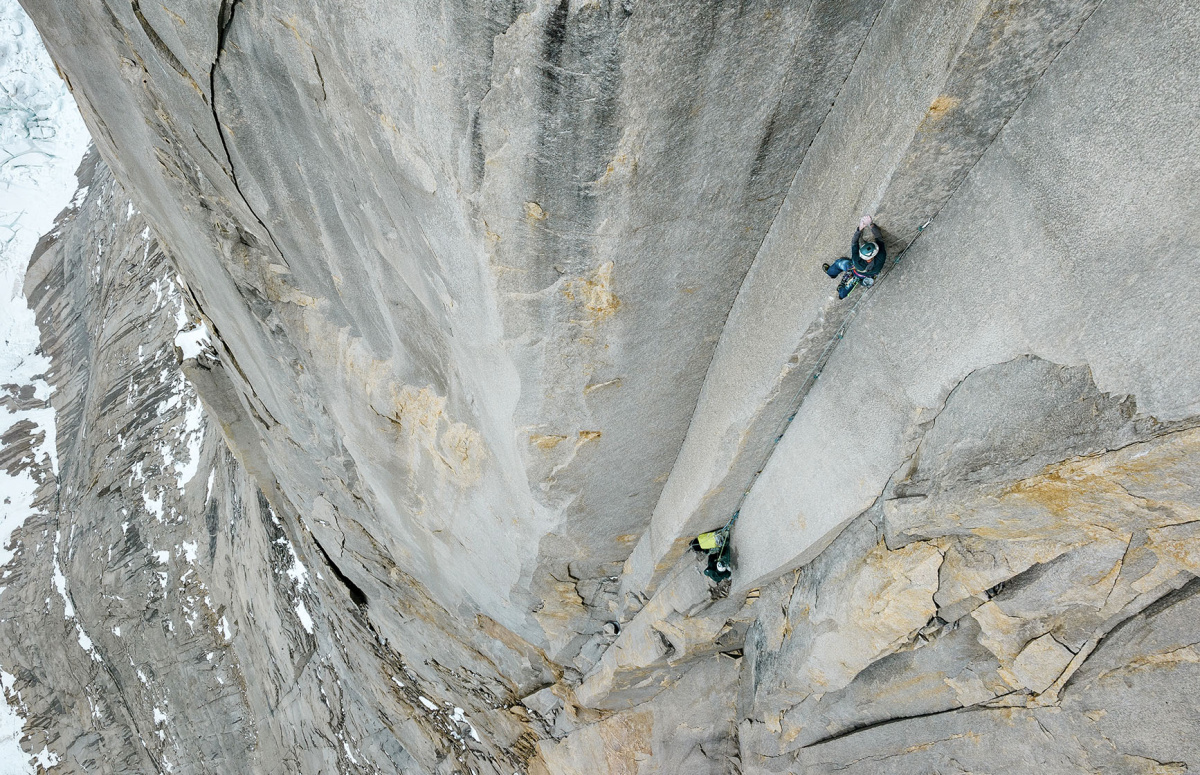 Tommy, as always, was ready to take the lead to get things done when needed — despite the fact that it had cost him a huge amount of energy the last time. But suddenly I changed my mind. I felt like going for it. I wanted to send this offwidth on lead as well. I took the lead and, in a “short” 1 hour and 10 minutes, sent the pitch. Tommy laybacked the pitch on top-rope, following me in only 20 minutes. This saved us a lot of time.
We had already done 13 hours of climbing by then, and somehow I felt full of energy and determination to bring us to the summit. From that point on, I took the lead again, except for one 5.10 pitch, all the way to the top of pitch 24, which we reached at 10 p.m. We had run out of water, so we decided this would be the perfect spot to switch into alpine clothes and pull out the stove we had carried for 1000 metres. One of the best moments of the climb: we put on all our clothes, took off our climbing shoes after 19 hours, and got into our lightweight mountain boots. The highlight was the hot liquid — we each drank one litre of electrolytes and half a litre of coffee.
Time somehow passed quickly, and at 11:45 p.m., we started the final 250 metres of low-angle 5th class climbing toward the summit. Tommy led this section, navigating through big blocks, snow, and ice. When I reached the last belay — the summit of the South African Route — I took the lead again toward the true summit. It was a long traverse in the dark over several peaks and pillars, climbing up and down surrounded by clouds. Luckily, we were still spared from the wind.
At 3:20 a.m., we reached the true summit — the one from which you can see the South Tower, if it were light.
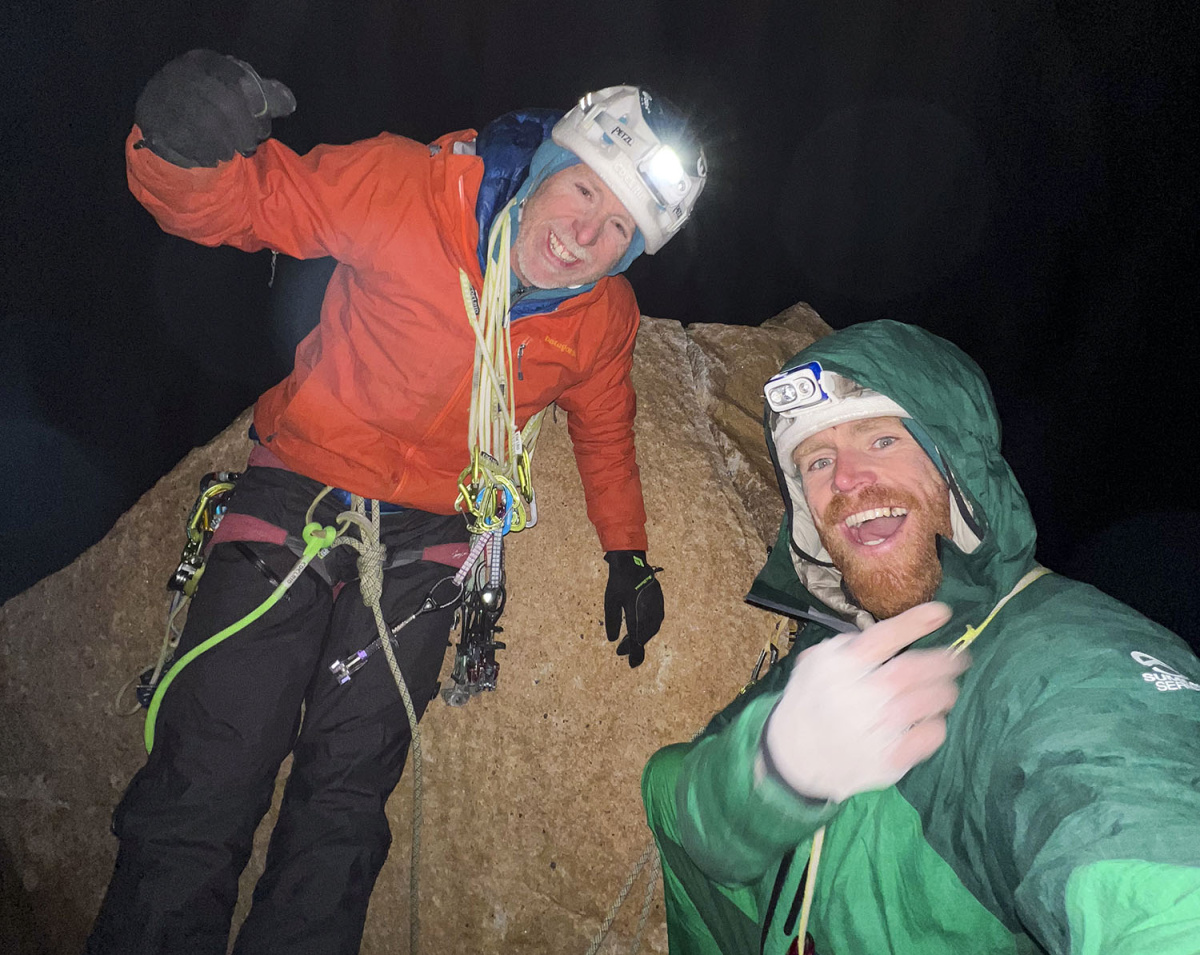
It felt surreal. We had done it. Unlike on the second attempt, I didn’t want to celebrate until we really reached the summit. Even the shortest and normally easiest pitch can become an absolute nightmare when there is ice in the cracks or when the wind picks up in already cold temperatures. The traverse along the summit ridge felt like our attempt could end at any moment if the wind increased or precipitation started to fall. Luckily, it didn’t. After we took our summit selfie, the weather changed: the wind picked up and small snowflakes began to cover the rock.
 We rushed back to the top of the route and started what became an epically slow descent. It was dark, we were exhausted, and snow blew upward instead of down, making it hard to see more than one metre ahead. Finding anchors was a real ordeal and took dangerously long. While Tommy searched, I tried to keep myself warm and awake by moving all my body parts. It was hard not to stop, stand still, or even curl into a ball at the anchor with my eyes closed. I fell asleep more than once.Luckily, daylight began to appear, and our bodies came out of this slow, lethargic state. We could see more clearly and find anchors more quickly. This was exactly why this objective was so much more committing. Eight hours after standing on the summit, we were back at the base of the wall. It was almost midday, the storm had passed, and some rays of sun shone on our battered faces.
This truly was an amazing experience. From attempt one to the send on attempt three, with all the ups and downs in between. I hesitated about this project every day during the trip. So many factors and elements had to align to make it work. This was exactly what I was searching for — a new challenge that was so unknown. An ambitious objective that would bring moments and situations I had never experienced before. The challenge of strategy, perseverance, dealing with nerves in town, and not knowing if it would all make sense or not. Trusting yourself that when faced with a complex situation, you will be able to deal with it without much preparation — that you will find the solution, the strength, and the energy to do what needs to be done.
I was scared when thinking about the climb, but I was never scared while climbing. I felt confident and devoted to reaching the summit and getting off it safely together with my climbing partner.
Tommy has been such an amazing force. He’s steady and trustworthy. He has proven many times that he can endure and will continue to the end. He’s positive about the past and optimistic about the future. I not only appreciate his skills but also value his intellect, his calculated point of view, and his clear opinions on situations. Tommy is also just a fun guy to be around, always up for a chat about interesting topics. No pressure, no expectations — and still he goes for it. He sincerely wants it. Tommy was the first to talk about a third attempt after we came so close on the second one. I can’t thank him enough for his commitment to this project, for staying so focused with me, and for being supportive in all the decisions we made together.
Last but not least, I want to thank Felipe Nordenflyght and Matthew Tangerman for spending three weeks with us and capturing footage at every possible moment.
Also, thanks to RedPoint Hostel in Puerto Natales for the good vibes — a real climbers’ hostel with an atmosphere that kept us psyched and fueled with asado. Thanks to all the people at the hostel with whom we shared matés, coffees, and beers. Thanks to Lise Billon, Fanny Schmutz, and Nate for letting us use their static ropes after the first attempt. Thanks to Caro North, Julia Cassou, Belén Prados, and Amelie Kuehne for letting us use their static ropes on the first eight pitches to rappel after the send. Thanks to Hernan Jofre of the Kau Hostel and Café for the refills.
Why climb it in a day?
First of all, this project wasn’t my idea — it was Sean’s in 2018. We tried it together but weren’t lucky with the weather that year. I kind of forgot about the idea until two years ago. I’ve now reached the summit of this wall twice in my life: once in 2017 after freeing El Regalo de Mwono in 19 days on the wall, and once in 2024 with the 18-day free ascent of Riders on the Storm, both with the great team members Sean and Nico. How cool would it be to climb this wall in a single day?
It must be possible if the weather allows it and if you know the route very well. I thought about coming back for Riders, but it seemed silly to spend an entire season again climbing the same route. Unlike Sean and Nico, I hadn’t done the South African Route, which they freed in 2009. The South African Route is the most obvious line on the East Face of the tower, following a huge dihedral from one third of the wall almost to the top. It is also the easiest free climb on paper.
Twenty years ago, people started travelling to the mountains of El Chaltén and climbing big routes in one continuous push without sleeping — the famous Chaltén-to-Chaltén ascents. Why not do this in the Paine? People actually do this in Torres del Paine, but not on the East Face of the Central Tower.
 What makes it so hard? — Isn’t it similar to El Cap?
A 1200-metre-high big wall in Patagonia. If you look at the topo of the South African Route, it looks doable. It’s not much longer than El Cap, and the grades are lower than Freerider. So what’s the big deal?
You would be ignorant of Patagonian weather to compare El Cap to the East Face of the Central Tower. The difference is conditions. Getting a good weather window is one thing, but you also need the right rock-climbing conditions. Often parts of the wall are wet or icy. When the lower slabs are wet, the upper wall might be dry due to wind exposure. When the lower slabs are dry, it might be too cold and cracks higher up are full of ice.
The weather can change rapidly. One moment, the rock is dry; an hour later, it can be wet or icy. Even without weather challenges, this wall would be demanding anywhere. The lower slabs are adventurous, with slow navigation and questionable rock quality. Wet slab traverses are common. Above the slabs, the climbing difficulty increases. It’s not Yosemite cruising, though it sometimes feels close — but the rock quality remains questionable.
From pitch 18, the 60-metre 5.11+ offwidth will slow you down. Hard part done? More than halfway? Not at all. Climbing becomes wide, slow, and often poorly protected. Some pitches are wet or icy, forcing you into alpine mode — free climbing with chalk in one hand and an ice axe in the other, sometimes wearing a boot or a crampon on only one foot.
Then comes the biggest challenge: standing on the summit. Weather often comes from the west, unseen. Near the top, you can already hear the “one-million-watt hairdryer” blasting up the west face. On the summit, winds above 40 km/h make the final terrain extremely difficult and dangerously cold.
Getting a weather window to climb the East Face is possible. Getting a window to climb it in a single day and top out is very rare.
The final and most dangerous challenge is the descent. Without portaledges or fixed ropes, you feel naked and vulnerable. If bad weather arrives during the descent, rappelling on natural anchors in wind, rain, or snow becomes nerve-wracking. Visibility drops, ropes get stuck, and mistakes become very costly.
Attempt 1: 28–29/01
Attempt 2: 02-04/02
Attempt 3: 13–14/02
- Sent all pitches both, on lead and on TR.
- P1–P5 Tommy
- P6–P13 Siebe
- P14 Tommy
- P15–19 Siebe
- P20 Tommy
- P21–P24 Siebe
- Last 250 metres, 4th/5th class Alpine style → Tommy
Summit ridge to the real summit → Siebe